
Designing Events for Remote and In-Room Audiences
The Shift to Dual-Audience Events
The days of designing events purely for the people in the room are gone. Today, many conference, leadership summit, or product launch events have two audiences:
- Those physically present
- Those joining remotely
The challenge? These audiences experience your event in completely different ways.
Too often, hybrid events are treated as a “bolt-on” livestream — a camera at the back of the room and a basic feed online. The result is predictable: disengaged remote viewers and a diluted experience overall.
Designing for both audiences properly means rethinking the entire event from the ground up.
Start With Experience, Not Technology
The biggest mistake in hybrid event design is starting with kit.
Instead, start with a simple question:
What should each audience feel, see, and do?
An in-room audience thrives on:
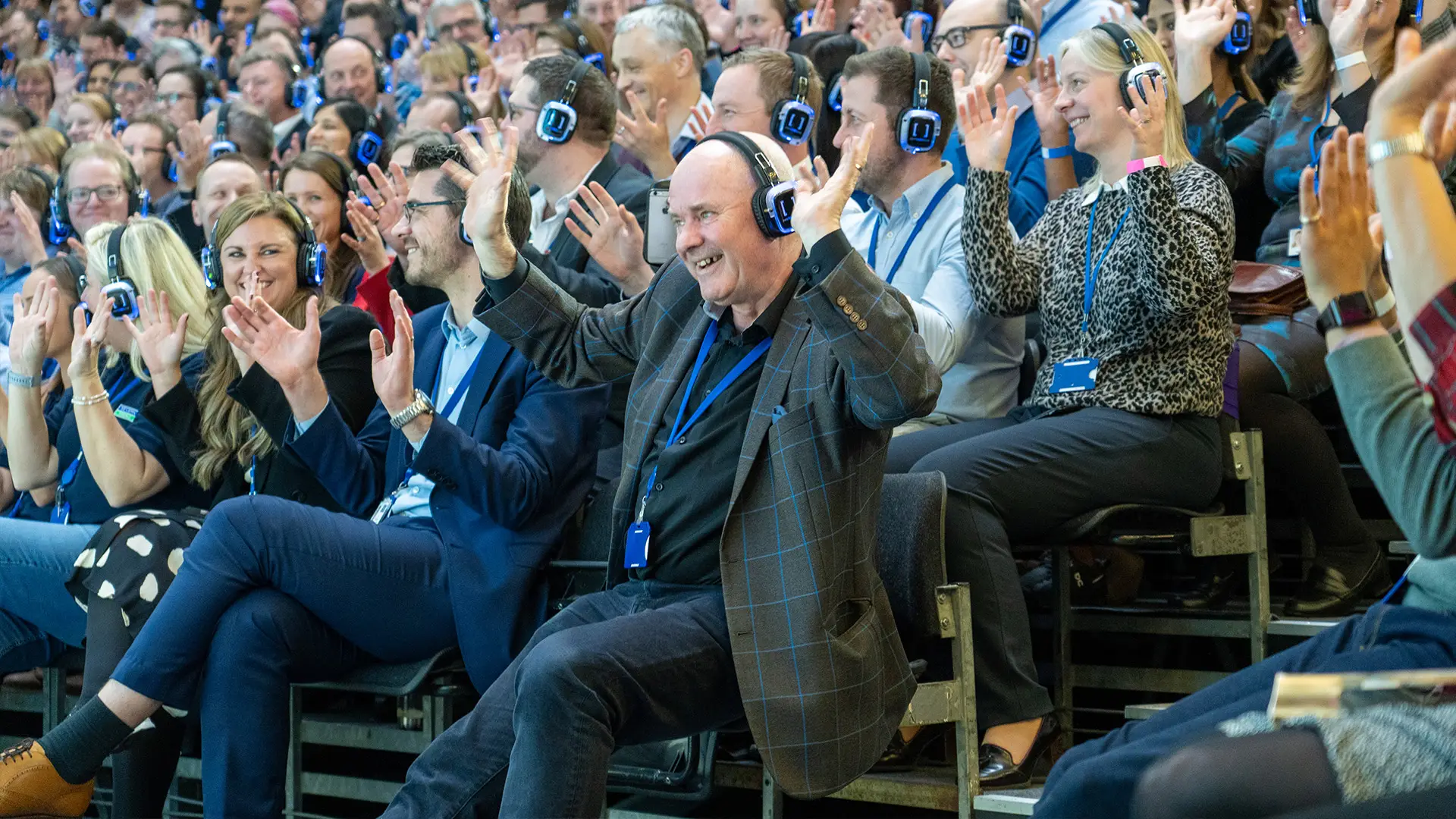
- Atmosphere and energy
- Networking and spontaneity
- Immersive visuals and sound
A remote audience needs:
- Clarity and structure
- Strong visual storytelling
- A sense of inclusion and participation
When you design with these differences in mind, the technology becomes an enabler — not the focus.
Build Two Experiences — Not One Compromise
The best hybrid events don’t compromise. They create two parallel experiences.
That might mean:
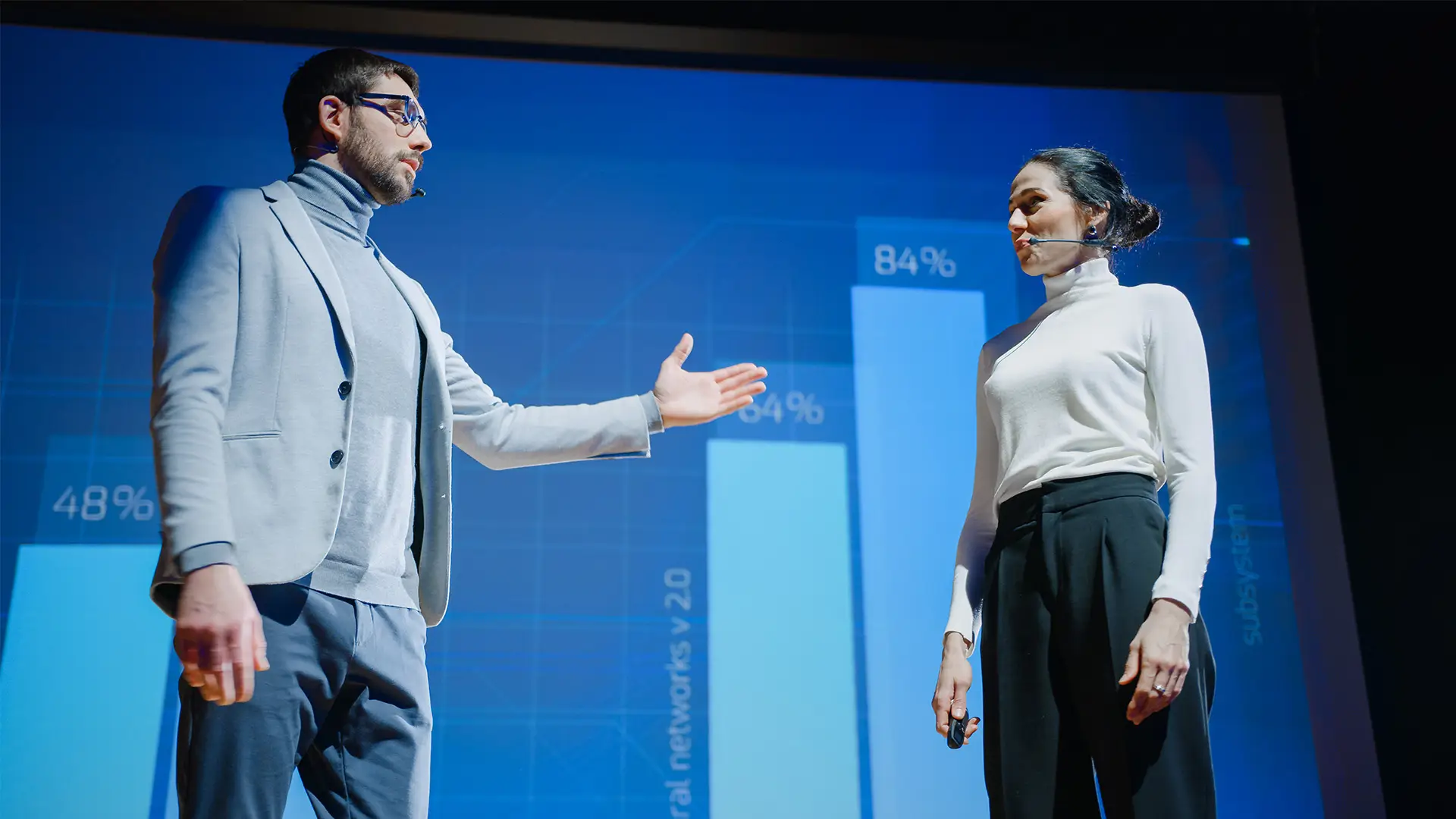
- A presenter engaging both the room and the camera intentionally
- Content designed for screens, not just stage backdrops
- Segments tailored specifically for remote viewers
Think of it like broadcasting rather than documenting.
This is where professional event production and digital delivery come together — ensuring both audiences receive a premium experience.
Explore how we deliver this through our live events by clicking here.
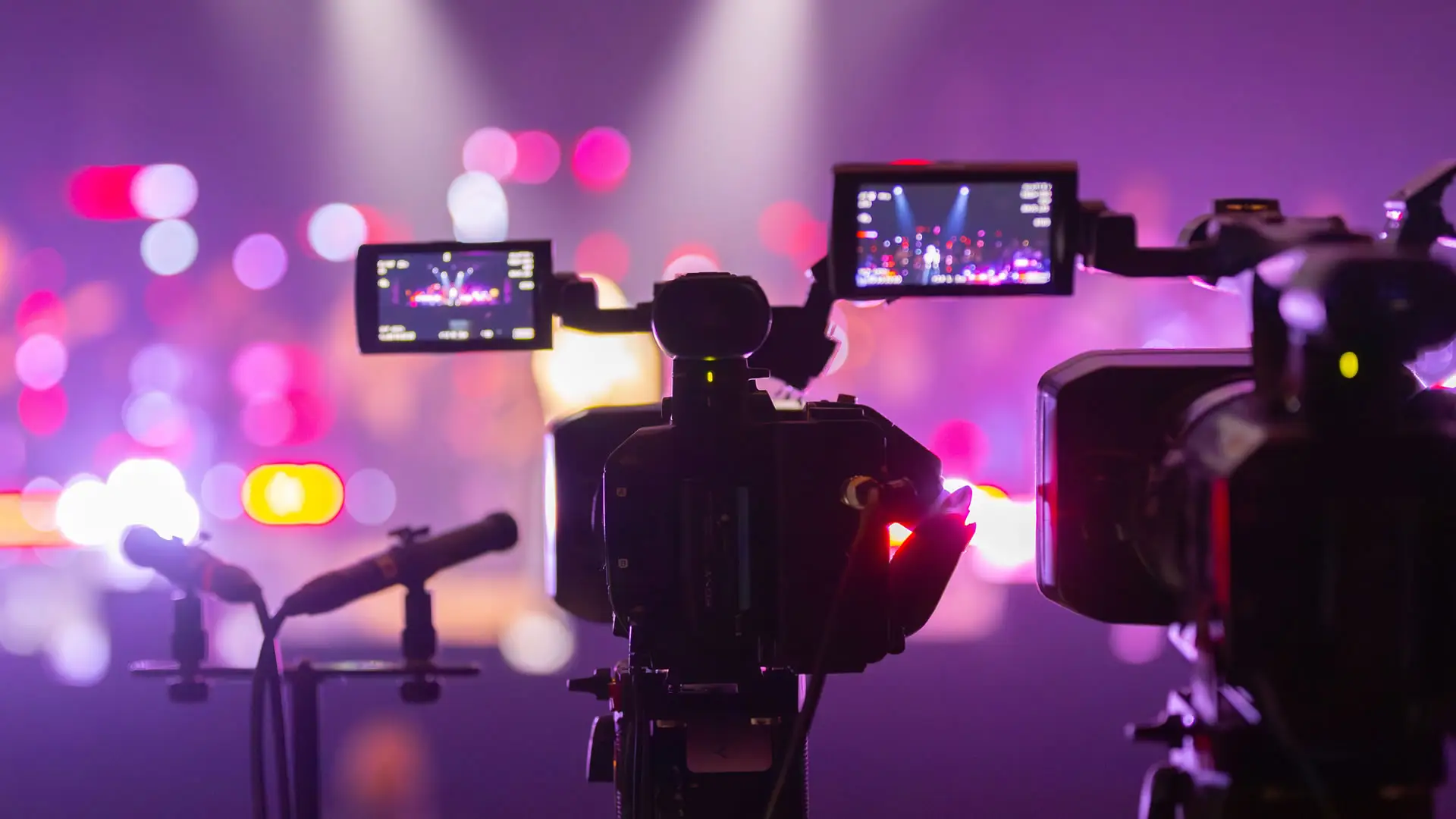
Design for the Camera, Not Just the Room
A stage that looks great in person doesn’t always translate on screen.
Hybrid-ready design considers:
- Camera sightlines and framing
- Lighting for broadcast, not just ambience
- Screen content that works on laptops and mobile devices
LED walls, for example, aren’t just visual impact tools — they become dynamic digital canvases that enhance both the in-room atmosphere and the remote viewing experience.
Engagement Must Be Intentional
Remote audiences won’t tolerate passive viewing for long.
You need to actively design moments that pull them in:
- Live Q&A and polling
- Interactive challenges or workshops
- Real-time feedback loops
At the same time, these interactions should feel natural to the in-room audience — not forced or disruptive.
The key is integration, not separation.
Content Is King — But Format Is Everything
Long presentations might work in a room. They rarely work online.
Hybrid events benefit from:
- Shorter, sharper content segments
- Visual storytelling over text-heavy slides
- Pre-recorded inserts mixed with live moments
This creates rhythm — something that keeps both audiences engaged from start to finish.
Reliability Is Non-Negotiable
For remote audiences, there’s zero tolerance for failure.
Poor audio, buffering streams, or dropped connections immediately break trust.
That’s why hybrid events demand:
- Robust streaming infrastructure
- Redundant systems and backups
- Dedicated technical direction
This is where combining event production expertise with digital platforms becomes critical.
Discover our digital event solutions by clicking here.
Hybrid Is an Opportunity — Not a Compromise
Done properly, hybrid events don’t dilute your impact — they amplify it.
You can:
- Reach wider audiences without increasing venue size
- Extend the lifespan of content beyond the live event
- Gather deeper insights through digital analytics
It’s not about choosing between in-person or virtual.
It’s about designing something that works brilliantly for both.
Final Thoughts
Designing events for remote and in-room audiences isn’t about adding a livestream — it’s about reimagining the entire experience.
When production, content, and digital delivery are aligned, hybrid events become more engaging, more scalable, and more valuable.
At White Event Production, we design and deliver experiences that work seamlessly across both physical and digital environments — ensuring every audience feels part of the moment.
We would love to discuss your next project with you and look at how we can incorporate hybrid audiences in to your event. Please click here to get in touch.
more blog posts

 get in touch